


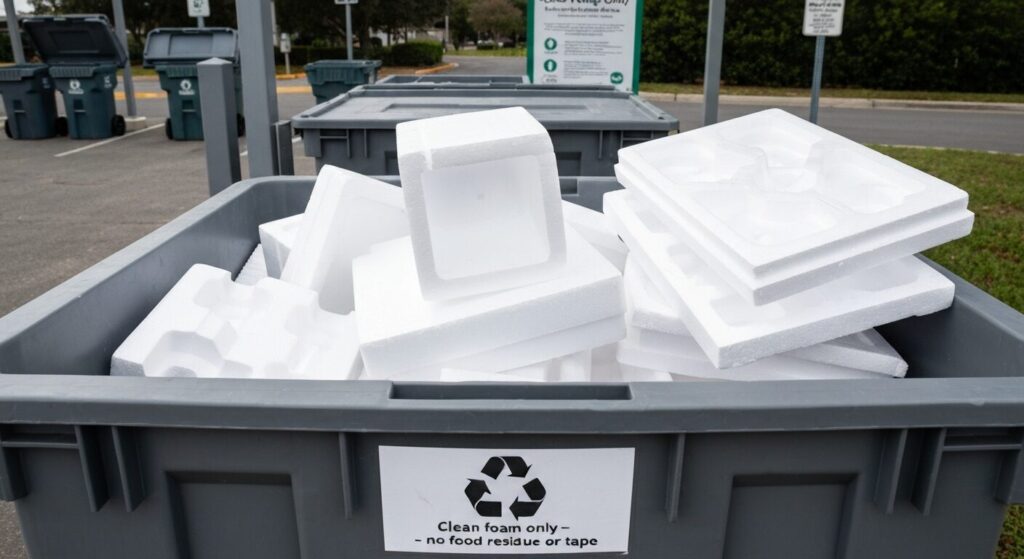
You’ve probably used Styrofoam today without even thinking about what happens to it afterward. Because they are attractive and feel light, almost like air.
But here’s your main question: Is Styrofoam recyclable or garbage? Yes, Styrofoam is technically recyclable. But in reality, it is often treated as garbage in most countries.
The answer is more complicated than most people expect. To understand it, you need to know the story behind it. Then you can easily decide on the next step for your Styrofoam leftovers. Let’s discover more details about this material.
What “Styrofoam” Really Is?

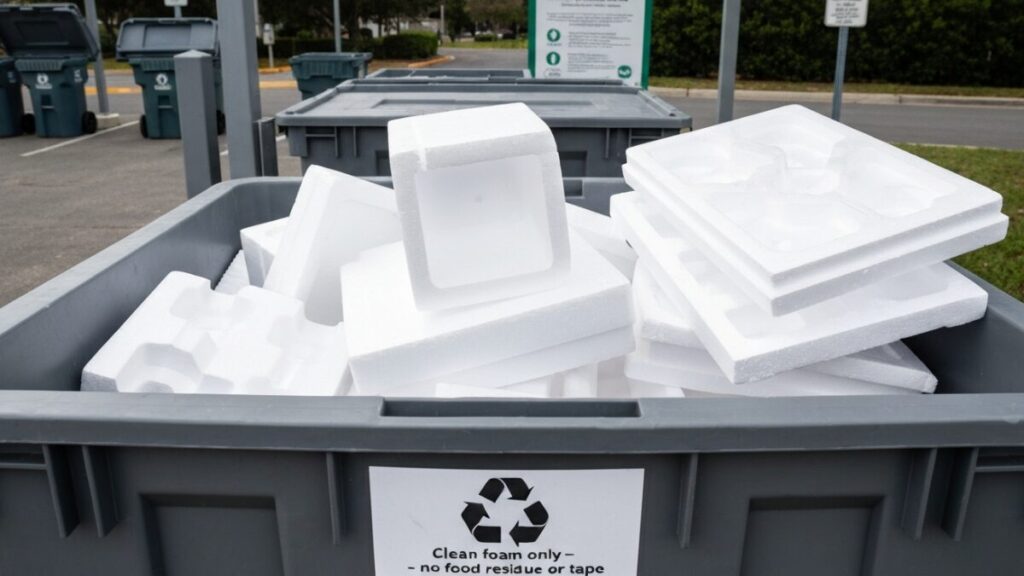
Most people think Styrofoam is just a type of cheap plastic. That’s not entirely true.
“Styrofoam” is actually a brand name and It is for blue insulation boards made by DuPont. These materials use in construction, not for food containers. It is technically known as extruded polystyrene (XPS).
The white color foams that we casually call Styrofoam are actually expanded polystyrene (EPS). This polystyrene type can find as white cups and packaging blocks in day-to-day life.
EPS making process includes expanding tiny plastic beads with steam until they fuse. The result is a rigid foam that is 95–98% air. That’s why it’s so light. And that’s also why it has become such a massive waste problem.
So, we will refer to both XPS and EPS materials in this discussion as Styrofoam.
Why Styrofoam Became So Popular
Styrofoam didn’t become widespread by accident. It solves a lot of problems extremely well, such as insulating heat, protecting fragile items, and costs very little to produce. This problem solver combination made it perfect for modern consumer life.
When you purchase food in a Styrofoam container, the food stays warm longer. Also, Electronics arrive undamaged at your doorstep with low shipping costs.
Due to these usability and flexibility for any application, this material is almost a perfect material for the industry.
And that’s exactly why it’s everywhere today.
Global Production of Styrofoam.
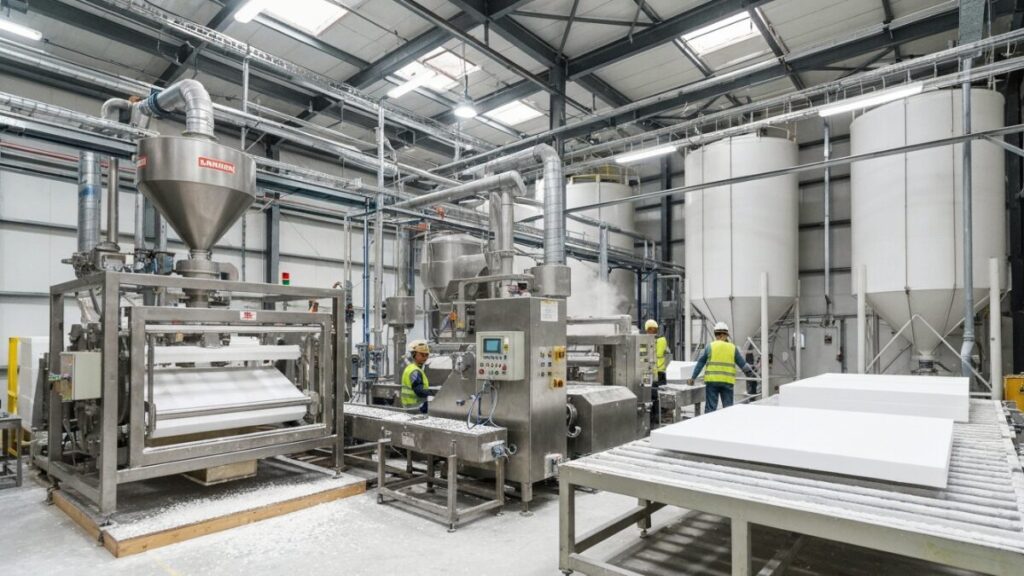
We can see lots of environmental problems with Styrofoam. But production continues to rise due to high demand.
According to recent surveys, Global expanded polystyrene production is now over 10 million metric tons per year. Interestingly, the market value was at around 18.5 billion USD in 2023, and it’s expected to keep growing.
Where do these productions apply? around 70% of this material use for packaging, while about 25% goes into construction insulation. These figures tell us that most Styrofoam products are for short-term use.
Think about how many times you have used any single-use white color containers this month?
Is Styrofoam Recyclable or Garbage?
As we discussed earlier, why do most foam materials end up in the garbage category despite the possibility of recycling?
The answer is interesting,
The problem starts with the properties of this material. Styrofoam is mostly air. That makes it extremely bulky but very light. Due to this, transporting it is inefficient and expensive.
Recycling companies have to move large volumes of material that weigh almost nothing. That alone makes it economically unattractive. Because recycling companies make profits based on the weight.
The second concern is the contamination. Most of the single-use Styrofoam waste comes from food packaging. Grease, liquids, and residues make recycling much harder. Even small amounts of contamination can ruin entire batches during the recycling process.
As a result, recycling facilities often reject it entirely and end up in the landfill.
How Styrofoam Is Actually Recycled
If your piece of foam enters a classic mechanical recycling chain, it will follow specialized processes. First, the foam enters in to a compression process to remove the air and make it denser. This can reduce its volume by up to 50 times, making transport more practical.
The next step is shredding and melting. The melted plastic is then turned into pellets, which can be used to manufacture new products.
These products might include insulation materials, frames, or even new foam items. But the system works best with clean, large pieces. Contaminated foams fail this process.
There are Advanced Recycling Technologies as well. Still, newer technologies are emerging. Some processes use solvents to dissolve Styrofoam and separate impurities. Others use chemical recycling to break polystyrene back into styrene monomers. In theory, this allows the material to be reused almost indefinitely.
But the truth is, these advanced technologies are still expensive and limited in scale. So, while promising, they are not yet a global solution for contaminated foams.
Recycling Rates Around the World

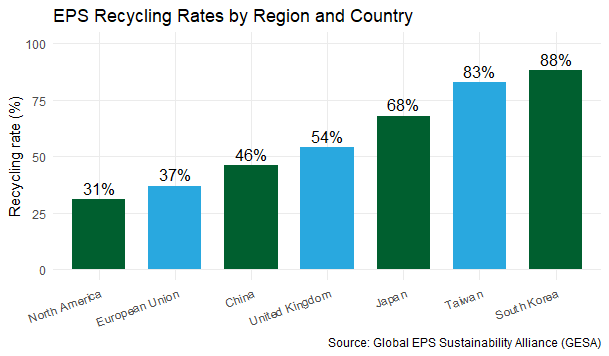
Recycling rates vary dramatically depending on the region and the infrastructure facilities. In Europe and North America, about 30 to 40% of EPS packaging recycled in last years. But in countries like Japan, South Korea, and Taiwan, rates can exceed 50%, sometimes reaching over 80%.
These higher rates are driven by strong policies and frameworks in each country. For example, extended producer responsibility systems require companies to manage their own waste.
But if we consider other developing regions, the picture is less optimistic. All Styrofoam products, including food containers’, recycling rates drop significantly. Some estimates suggest that less than 1%.
Businesses’ waste is recycled more than household waste.
Most Styrofoam recycling happens in business settings. Think appliance packaging, fish boxes, and industrial shipping materials. After use, these materials are mostly clean, uniform, and collected in large volumes. This background makes them ideal for recycling.
But Household waste is very different. If you look at your house’s foam waste, it’s mixed with several types and contaminated with food leftovers. That’s why most residential recycling systems do not accept Styrofoam.
In these types of situations, recycling isn’t an option. Even if you put your Styrofoam waste in recycling bins, that waste ends up in landfills. But the main problem is that they don’t degrade easily.
If you’re asking, “Is Styrofoam biodegradable?”, the answer is no.
It can persist for decades or even centuries. Over time, it may break into smaller pieces, making microplastics, but it never truly disappears.
Due to this reason, in some countries, Styrofoam wastes burn in waste-to-energy plants. This option saves landfill areas and generates energy. But it also releases carbon dioxide and potentially harmful pollutants. So, burning is a trade-off, not a solution.
When Styrofoam becomes garbage makes lots of problems.
If you improperly dispose of the Styrofoam waste, it raises several environmental concerns. One of the biggest concerns with Styrofoam is microplastic pollution. Because it’s fragile, it easily breaks into tiny fragments. These fragments spread through air, water, and soil. Today, we can find foam microplastics almost everywhere on Earth, from deep oceans to mountain ecosystems.
Small animals often mistake these particles for food. This can lead to internal injuries, starvation, or exposure to toxic chemicals.
And most importantly, microplastics are being detected in the human body.
Health Concerns are considerable. Styrofoam building block is styrene, a chemical with potential health risks. Some health agencies classify it as “reasonably anticipated to be a human carcinogen.”
Small amounts of styrene can leach into food, especially when containers are hot or oily. They are still in applications because Most studies suggest these levels are within regulatory limits.
But concerns remain.
And many environmental health experts argue that safer alternatives are available.
Styrofoam is not just a waste problem. It also contributes to your carbon footprint. As you know, these materials comes as a product from fossil fuels industry. Also requires energy-intensive processes. This contributes to greenhouse gas emissions. Also, If you burn your foam waste, it releases carbon dioxide contributing atmospheric pollution. This is an important consideration for an environmentally conscious person.
Actions to reduce Styrofoam waste
Because of these issues, many governments are now restricting Styrofoam use. As an example, the European Union has banned Styrofoam food containers entirely. Canada and several U.S. states have implemented similar bans. These policies help with prevention rather than recycling.
The idea is simple: if a material is difficult to manage, reduce its use. This represents a major shift in environmental strategy.
With these bans, we need alternatives. Materials like molded fiber, paperboard, and biodegradable packaging are gaining popularity. Reusable container systems are also expanding in many cities. So you select those kinds of alternatives to fulfill your requirements.
So, What Should You Do?
Since the policies are different from country to country, start by checking your local recycling rules. If Styrofoam is accepted, make sure it is clean and properly sorted. Especially, food containers must wash before being given into recycling chains.
If it’s not accepted, do not put it in your recycling bin. It can contaminate other recyclable materials. In such situations, the most effective step is reduction. Avoid unnecessary foam packaging when possible. You can choose reusable or alternative materials as we discussed earlier.
So, is Styrofoam recyclable or garbage? It is both. Check with your local policies and try to put it into a recycling chain. But recycling alone cannot solve this. It requires better design, smarter policies, and more responsible consumption.